



I created Hyperlambda and Magic Cloud — an open source platform that turns a database into a secured API in seconds, and turns that API into a tool set any AI agent can call.
I build and maintain it at AINIRO.IO, where it is also professionally hosted.
Working on now: MCP and OAuth so agents can reach a backend safely, and a fine-tuned model that writes Hyperlambda. Recently replaced the dashboard's 46,000 lines of Angular with a 15,500-line React application.


Point Magic at a database and it writes the backend for you — POST, GET, PUT and DELETE per table, with paging, sorting, role-based authorisation and logging as generation options rather than afterthoughts. Everything else you write in Hyperlambda, which is interpreted, so saving a file deploys it. No build step, no restart, no pipeline.
The repository is at github.com/polterguy/magic, MIT licensed. One command to run it:
curl -fsSL https://hyperlambda.dev/docker-compose.yaml | docker compose -f - upThen open localhost:5555, point it at localhost:4444, and sign in with root / root.
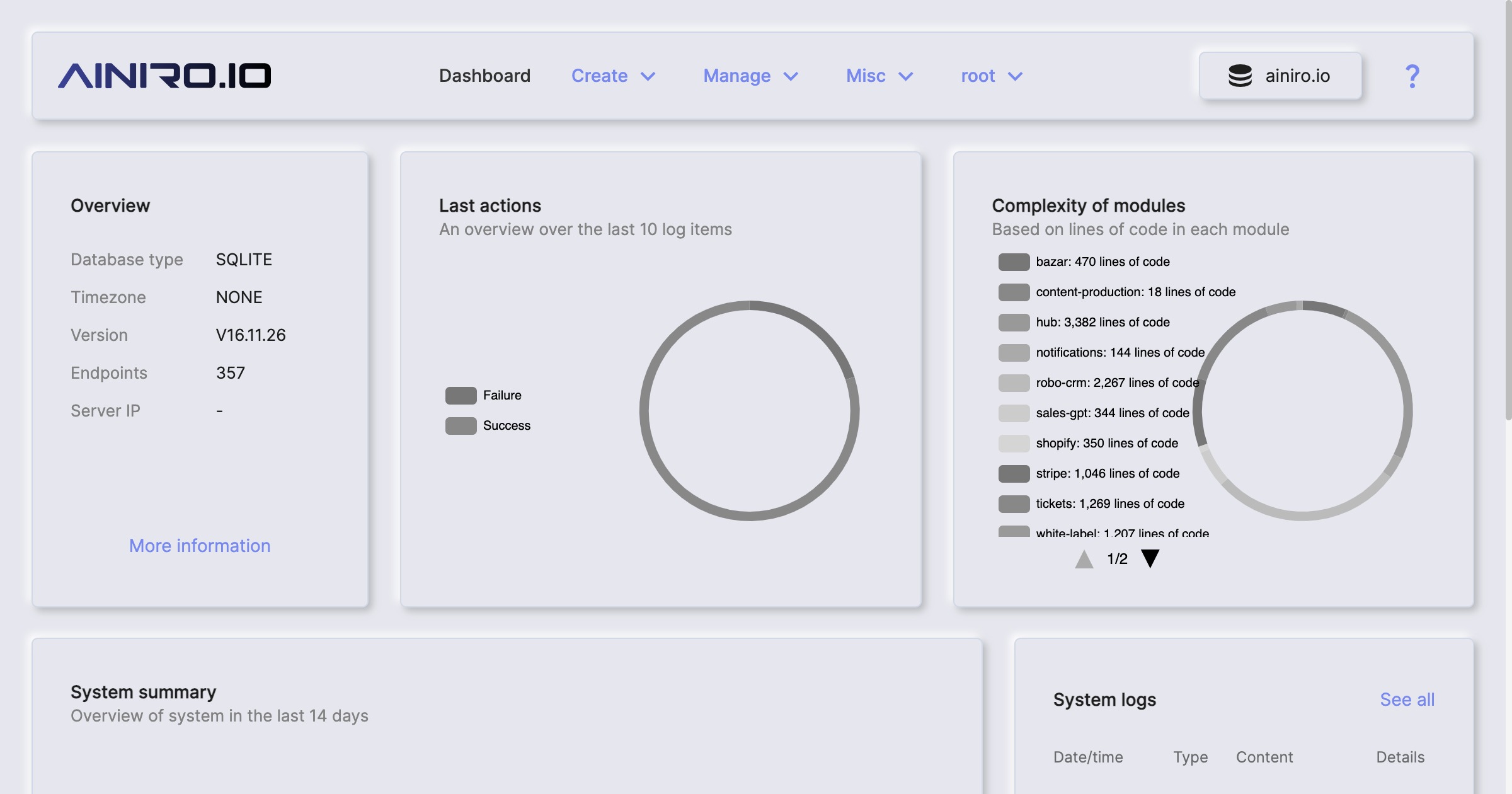
Install the MCP plugin and every endpoint on your cloudlet is published as a callable tool. Any MCP-capable agent discovers them and invokes them directly, under the same role checks that apply to every other caller — so the role you hand the agent is the limit of what it can reach.
Magic also generates Hyperlambda on demand. An agent that needs a capability you never built can have one written, saved and invoked inside the same conversation.
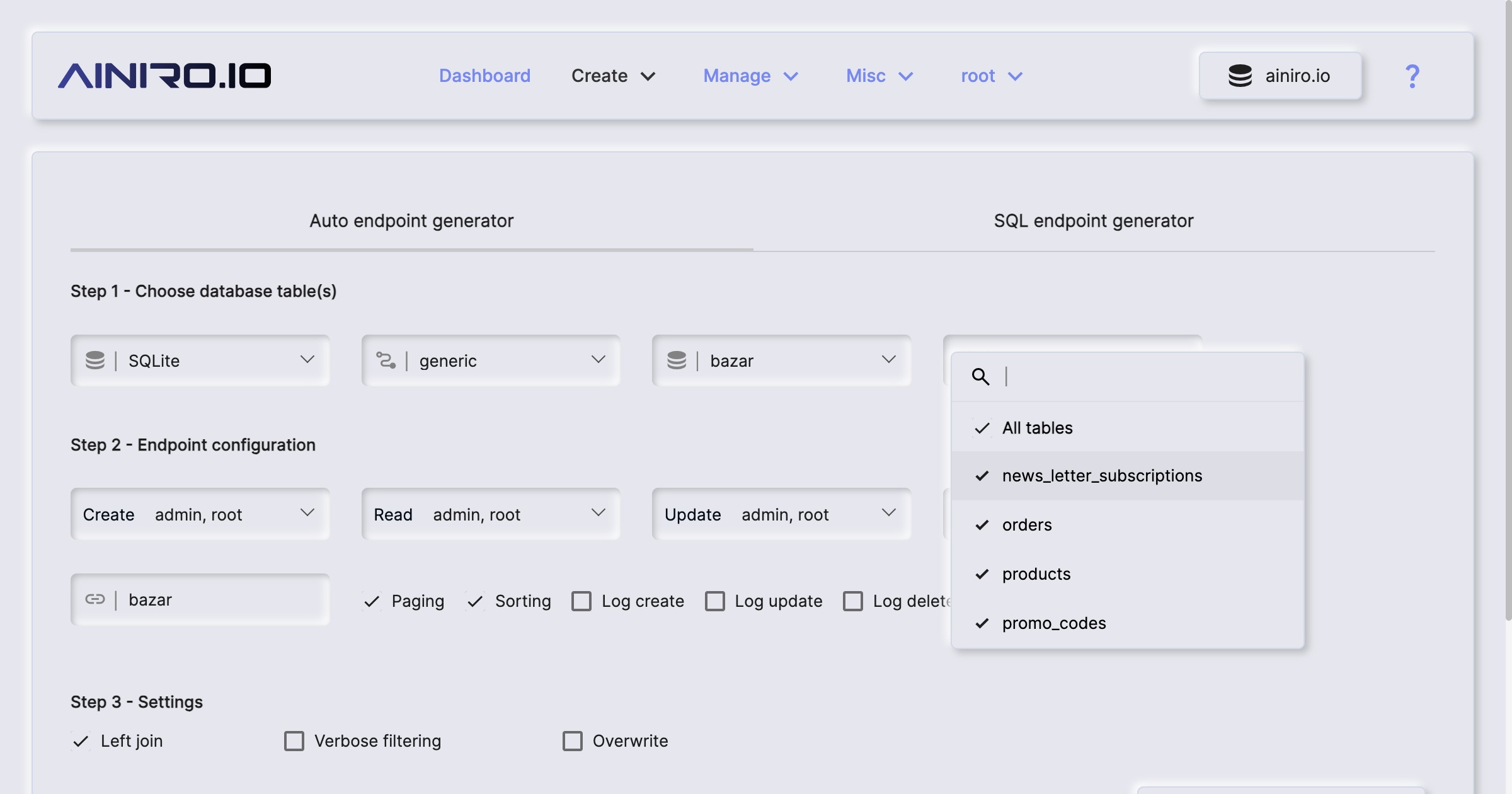
The Endpoints Generator lets you choose a database, tick the tables you want, and get every one of them securely wrapped in CRUD endpoints. You decide which roles may call what, whether writes are logged, and how long responses may be cached. A second tab wraps a custom SQL statement in an endpoint of its own.
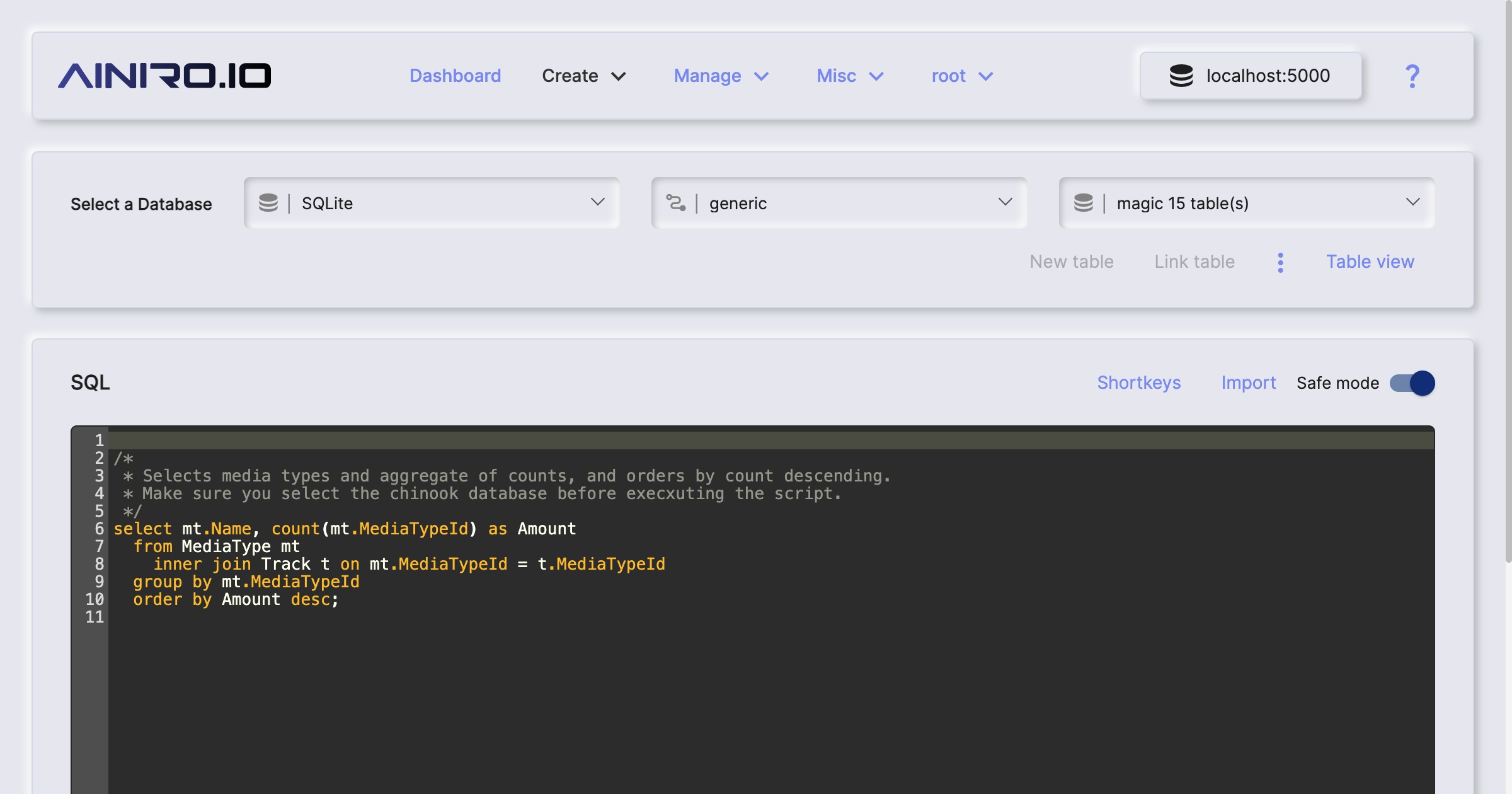
With SQL Studio you can write and execute SQL from anywhere, on any device, with completion over your real tables and columns, saved snippets, CSV export, and a safe mode that caps what a careless query can do. The Designer tab renders every table as a schema card and lets you add tables, columns and relations without writing DDL.
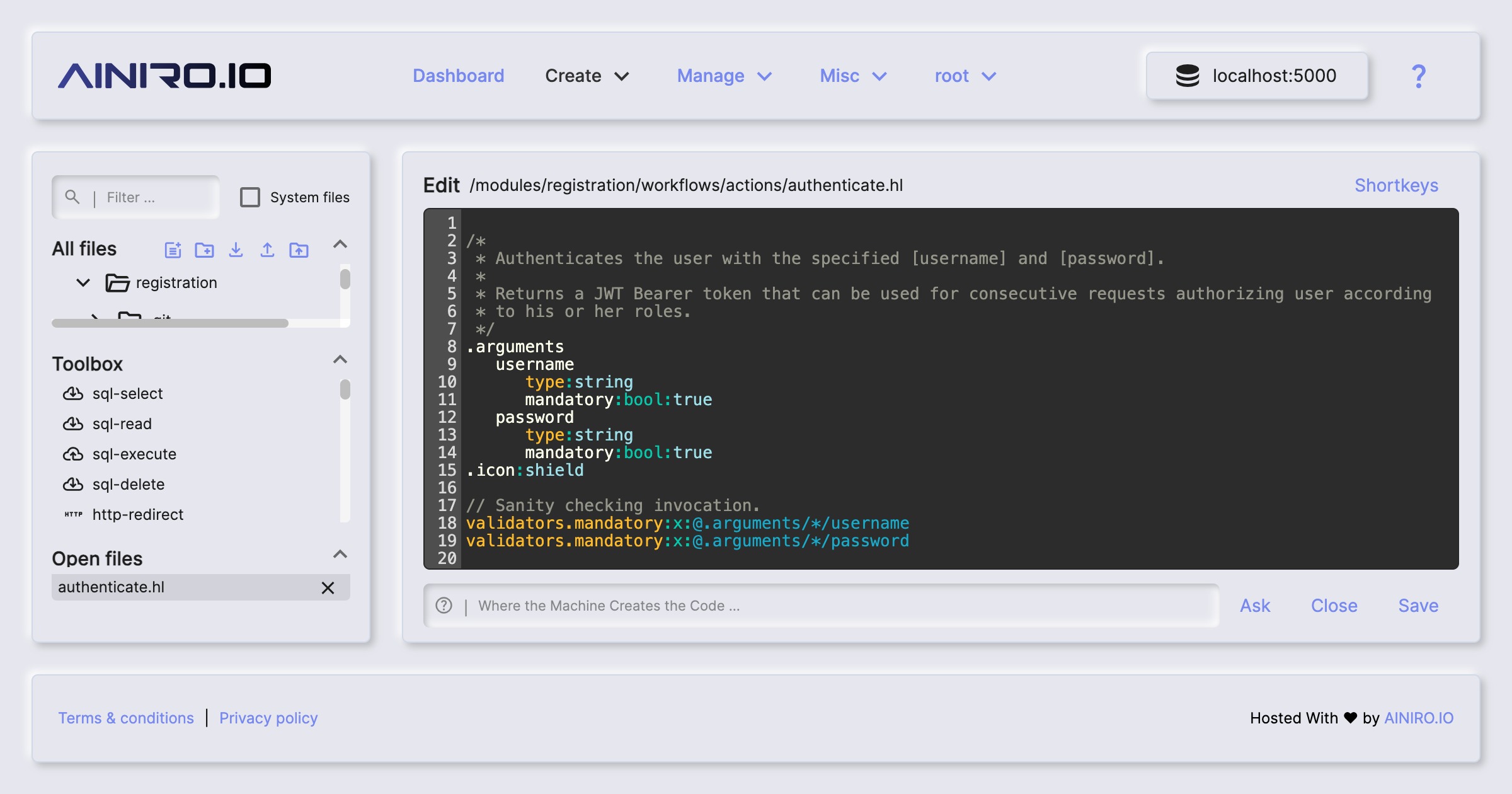
Hyper IDE edits every file on your server from the browser — multiple files as tabs, autocomplete against the slot vocabulary your particular backend knows, and execution of endpoints with real arguments so you see the status code and response. A prompt bar along the bottom generates Hyperlambda from a plain description.
Underneath all of it is Hyperlambda, a DSL whose syntax resembles YAML and whose execution is a tree of nodes rather than compiled text. That shape is what makes the rest possible: code is data, so it can be generated, inspected, rewritten and constrained at runtime — which is exactly what you want when the thing writing the code is a language model rather than a person.
- Documentation — guides, slot reference, dashboard walkthrough
- hyperlambda.dev — the project site, and where I write about this
- AINIRO.IO — professional hosting, and my day job
- thomas@ainiro.io